
Explore the Family Guide
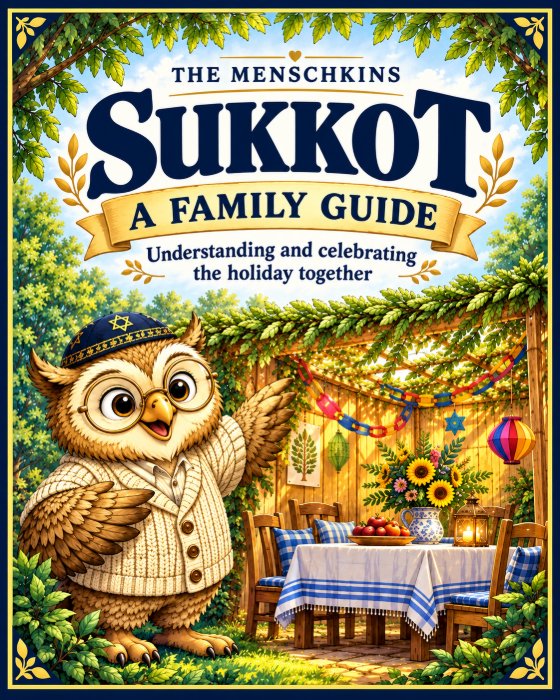
A beautifully illustrated guide that explains the holiday, its traditions, and meaningful ways to celebrate together as a family.
Gather, Celebrate, and Give Thanks
Simple explanations, joyful music, and meaningful ways to help children understand and celebrate Sukkot.
Explore the Family GuideUnderstand it. Celebrate it. Pass it on.
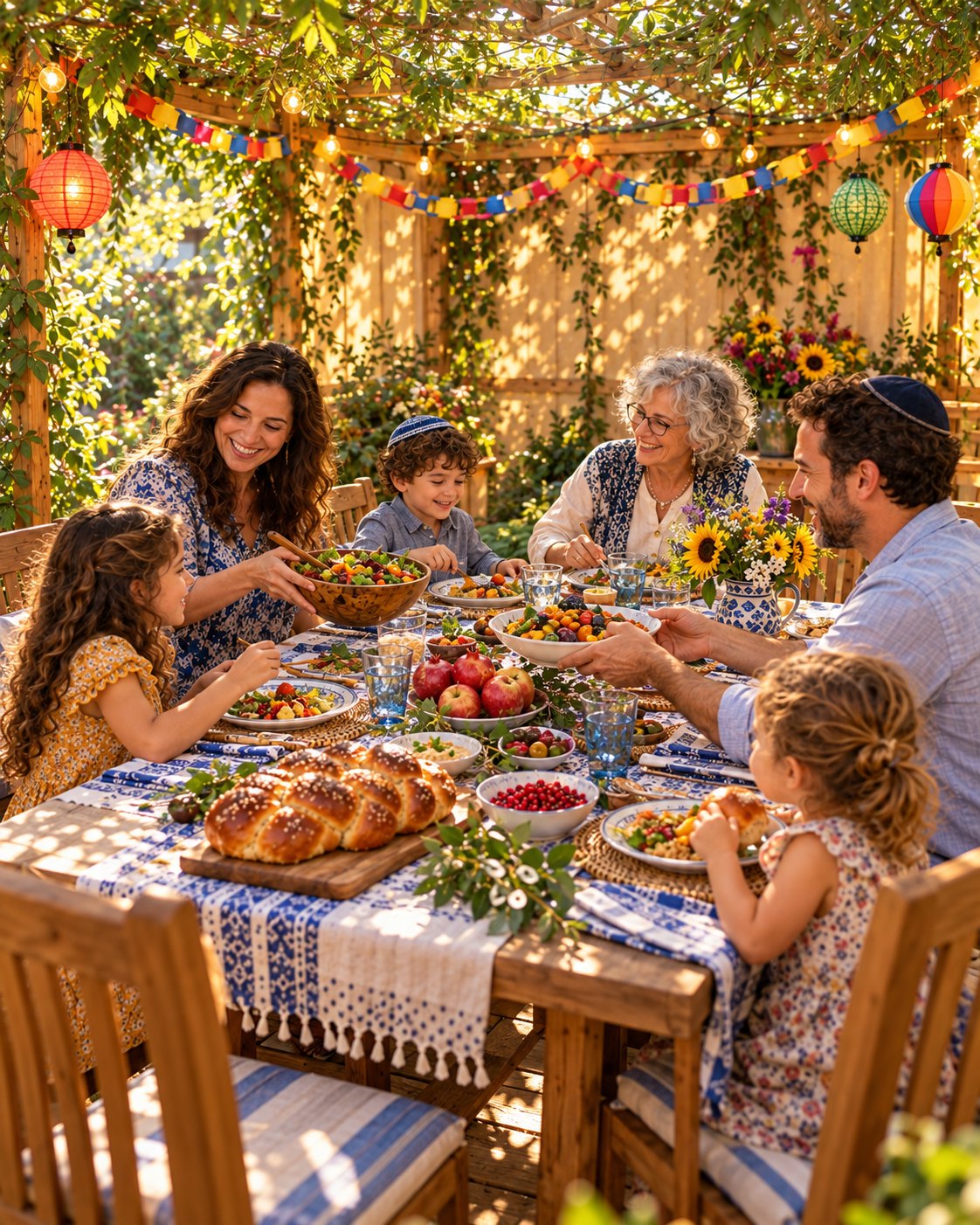
Sukkot is a joyful holiday when we build temporary shelters, called sukkot, to remember how God cared for the Jewish people in the desert.
It's also a fall harvest festival: a time to give thanks for the food the earth provides, enjoy the beauty of nature, and welcome family, friends, and neighbors.
A beautifully illustrated guide that explains the holiday, its traditions, and meaningful ways to celebrate together as a family.
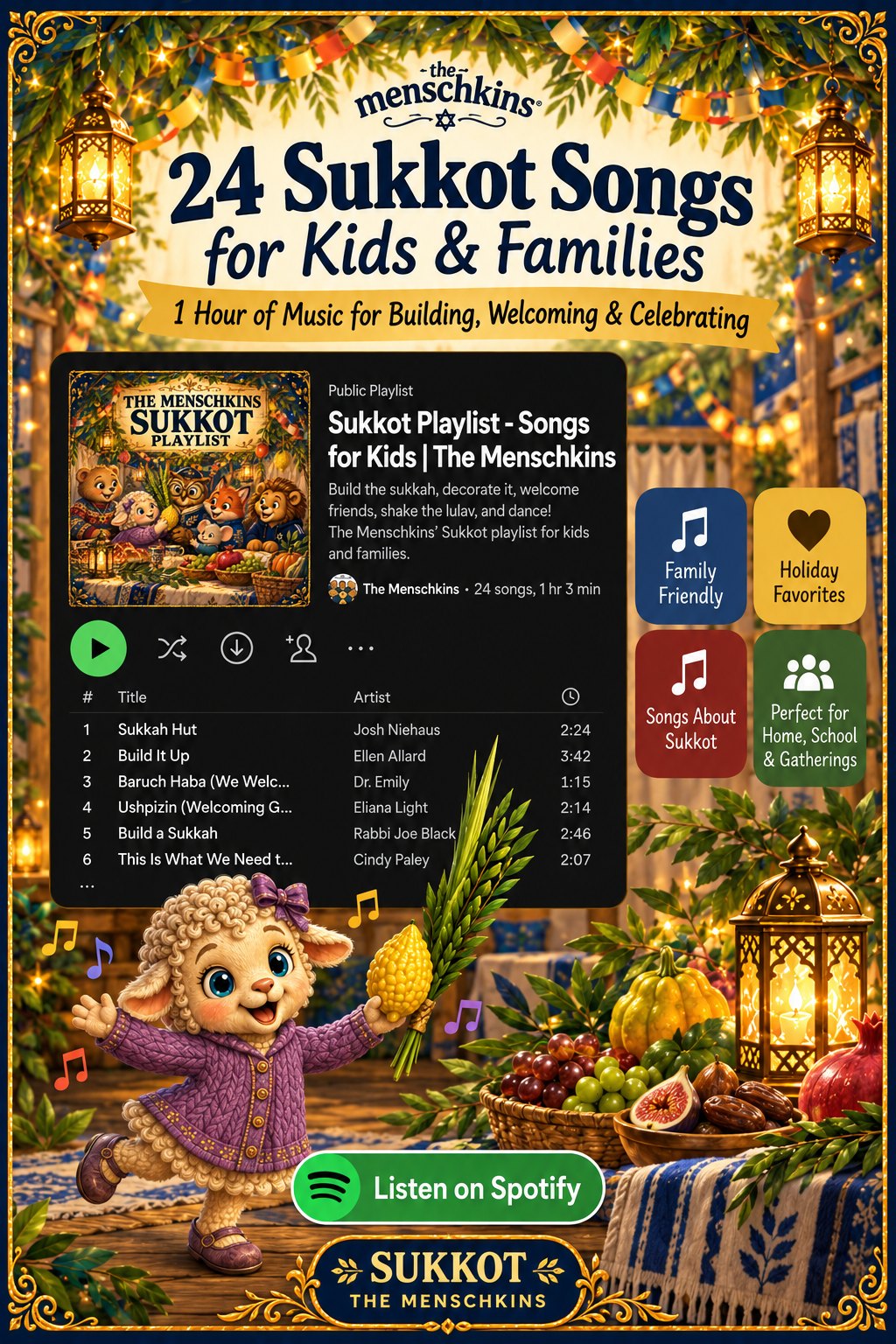
A joyful playlist of 24 songs, about an hour of music, for building the sukkah, welcoming friends, shaking the lulav, and dancing together.
Look inside the 9-page Sukkot Family Guide. Tap any page to see it up close.
9-page PDF, 8.5 × 11 in. Print it, share it, read it together.
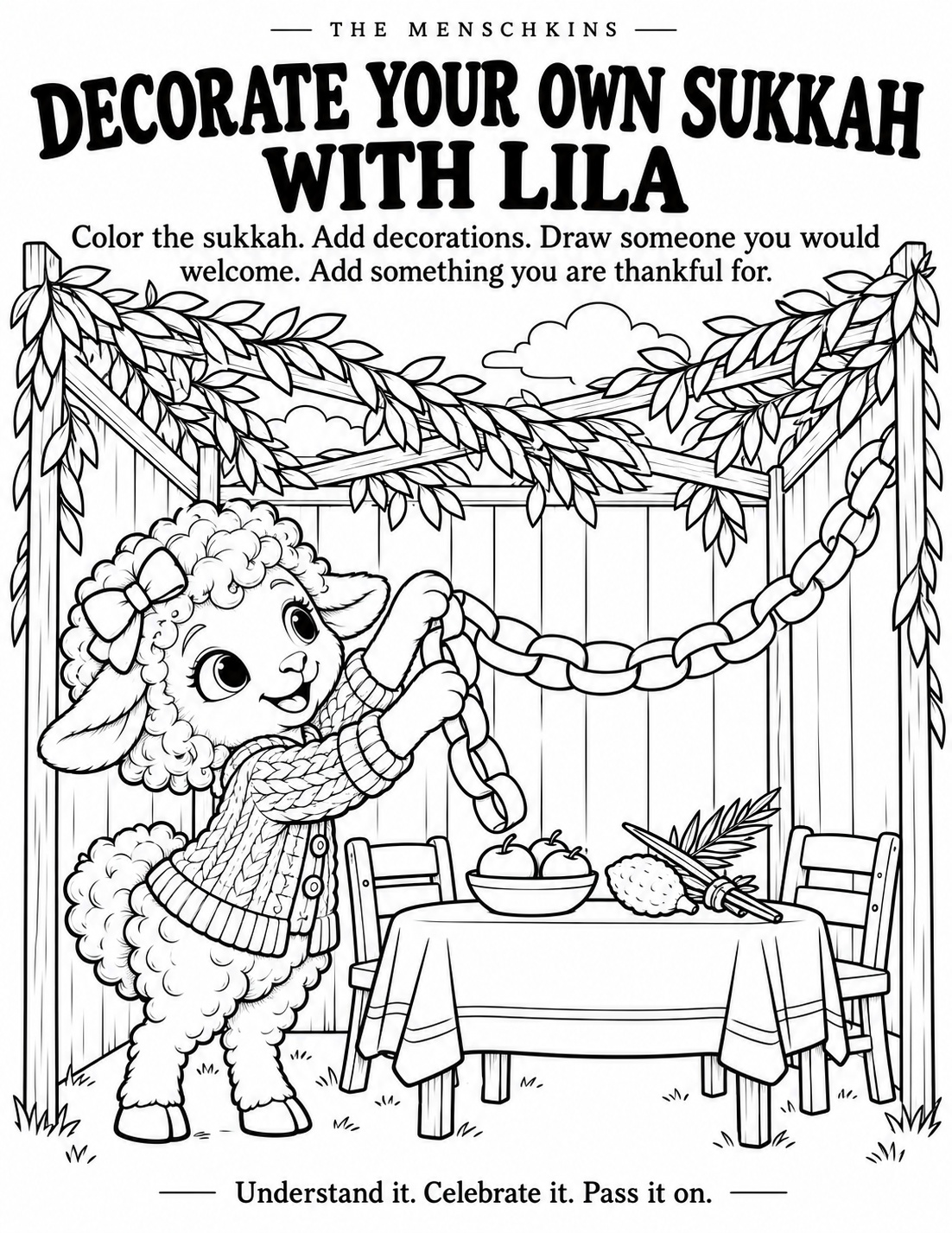
Free Printable & Menschkins News
A coloring page for little hands. Lila has started the paper chain. Your child finishes the sukkah.
One-page PDF, 8.5 × 11 in. Plus Menschkins news and new holiday stories. Unsubscribe anytime.

Right After Sukkot
Sukkot leads right into Shemini Atzeret and Simchat Torah, when we finish reading the Torah for the year and start again from the beginning. Communities carry the Torah scrolls, sing, and dance together.
Sing, dance, and celebrate along with the Menschkins.
Simple answers from the Menschkins Sukkot Family Guide, written to read aloud.
Sukkot is a joyful Jewish holiday when families build temporary shelters, called sukkot (one is a sukkah), to remember how God cared for the Jewish people in the desert. It is also a time to give thanks for the harvest, enjoy the beauty of nature, and welcome family, friends, and neighbors.
Sukkot begins five days after Yom Kippur, on the 15th of the Hebrew month of Tishrei, which usually falls in September or October. The celebration lasts seven days. It is a fall harvest holiday, and it leads right into Shemini Atzeret and Simchat Torah.
We build a sukkah to remember the temporary shelters the Israelites lived in during their journey through the wilderness. Sukkot is also a harvest festival, a time to give thanks for what the earth provides. Remember, give thanks, rejoice.
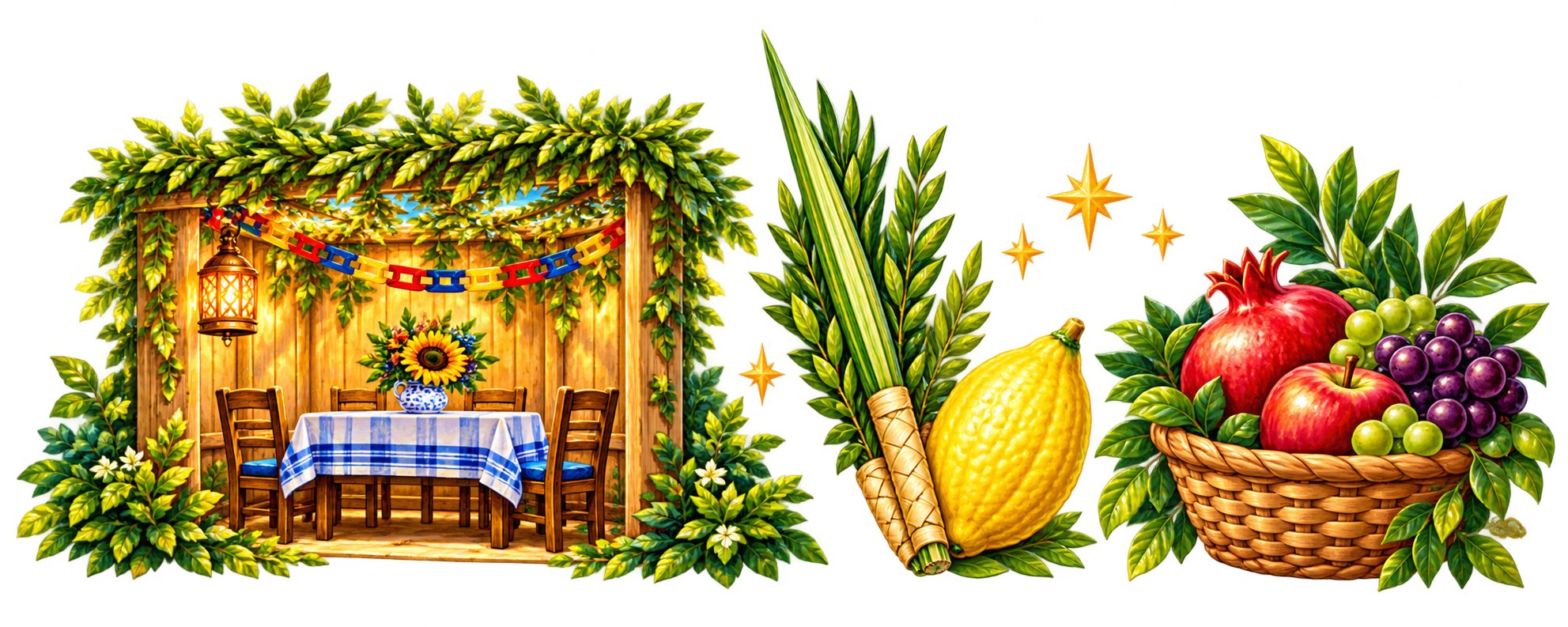
A sukkah usually has three or more sides and a roof made of natural plant material, like branches or leaves, called schach. The schach gives shade while leaving openings so you can still see the sky.
With paper chains, hanging fruit, lanterns, and kids’ drawings. Making the sukkah beautiful is part of the mitzvah. Try the free Decorate Your Own Sukkah with Lila coloring page.
We eat meals, welcome guests, sing, learn, and spend time together in the sukkah. Some families also sleep in the sukkah. Eat, gather, sing, celebrate.
Ushpizin is an Aramaic word meaning “guests.” On Sukkot we welcome family and friends into the sukkah, and tradition also invites special guests from Jewish history, such as Abraham, Sarah, Moses, and David. A good question to ask children: who would you welcome?
The Four Species are the lulav (a palm branch), the etrog (a citron), hadasim (myrtle), and aravot (willow). The myrtle and willow are bound together with the lulav. Holding the lulav and etrog together is a mitzvah of Sukkot. We say a blessing and wave them, and they connect us with the harvest, the natural world, and God’s presence all around us.
Hold the lulav and etrog together, say the blessing, and shake them gently in six directions: front, right, back, left, up, and down. Shaking in every direction reminds us that God is everywhere.
Sukkot leads into Shemini Atzeret and Simchat Torah. On Simchat Torah, Jewish communities celebrate finishing the yearly cycle of reading the Torah and beginning it again. People carry the Torah scrolls, sing, dance, and celebrate together.
Share Jewish traditions, values, and joy with the next generation.
L'dor v'dor. From generation to generation.